Friday, 5 December 2014
Something else that shouldn't happen in a cinema
There's a Maggie Smith season and the BFI is showing a rare late 1950s TV play, Somerset Maugham's "For Services Rendered". Yet, the version is in colour and Maggie Smith-less. On the plus side, the version they actually showed is so rare, it's not on IMDb.

Sunday, 26 October 2014
Zaza (1938)
In George Cukor's career, "Zaza" comes after "Holiday" and before "The Women" and "The Philadelphia Story". In Claudette Colbert's, it comes between "Bluebeard's Eighth Wife"
and "Midnight", two wonderful Wilder/Brackett scripted films. And yet,
the film is little more than a footnote in both their careers.
 While
the film's story is perfectly banal (doomed love affair with a married
man), for once I don't think the problems start with the script. It's solid,
competent, gives characters a chance to develop and keeps the story moving at a
good pace. To me the main problem are the two leads: Colbert and
Herbert Marshall. Marshall has even less presence than in other films,
and devoids his character of any charm - although to be fair he doesn't
have as much screen time as his character should have. But I don't like
him, and it pains me to see him on screen. Colbert on the other hand is
completely miscast, despite a few glorious moments. When she plays
Marshall (the meeting at the station, the backstage meeting) she excels -
but then she overdoes the innocent girl moments. And this is the key -
she is far too knowing for me to believe she could ever be deceived by a
man, any man.
While
the film's story is perfectly banal (doomed love affair with a married
man), for once I don't think the problems start with the script. It's solid,
competent, gives characters a chance to develop and keeps the story moving at a
good pace. To me the main problem are the two leads: Colbert and
Herbert Marshall. Marshall has even less presence than in other films,
and devoids his character of any charm - although to be fair he doesn't
have as much screen time as his character should have. But I don't like
him, and it pains me to see him on screen. Colbert on the other hand is
completely miscast, despite a few glorious moments. When she plays
Marshall (the meeting at the station, the backstage meeting) she excels -
but then she overdoes the innocent girl moments. And this is the key -
she is far too knowing for me to believe she could ever be deceived by a
man, any man.
Cukor himself, should have been more at ease with the material - we are in his favoured milieu of the theatre ("A Double Life", "Les Girls"). The Portuguese Cinematheque note on film also draws comparisons with "Camille". But I never felt his heart was on this. The good moments - the opening and closing, the scenes I mentioned above, and Colbert's scene with the doll - are few and far between. The opening scene in particular, with the camera travelling through the occupants of third class train carriage ending in Colbert in a shot that anticipates her similar introduction in "Midnight" On the other hand, certain scenes drag (Colbert's visit to Marshall's Paris apartment) or fail to achieve the right tone (most of the backstage scenes, where there is a lot of repetition).
The best thing in the film are the three supporting actors, playing Colbert's stepmother, her maid and her agent/partner (respectively Helen Westley, Constance Collier and Bert Lahr). Their presence helps bridge the duller moments of the film.
Cukor himself, should have been more at ease with the material - we are in his favoured milieu of the theatre ("A Double Life", "Les Girls"). The Portuguese Cinematheque note on film also draws comparisons with "Camille". But I never felt his heart was on this. The good moments - the opening and closing, the scenes I mentioned above, and Colbert's scene with the doll - are few and far between. The opening scene in particular, with the camera travelling through the occupants of third class train carriage ending in Colbert in a shot that anticipates her similar introduction in "Midnight" On the other hand, certain scenes drag (Colbert's visit to Marshall's Paris apartment) or fail to achieve the right tone (most of the backstage scenes, where there is a lot of repetition).
The best thing in the film are the three supporting actors, playing Colbert's stepmother, her maid and her agent/partner (respectively Helen Westley, Constance Collier and Bert Lahr). Their presence helps bridge the duller moments of the film.
Wednesday, 13 August 2014
Lauren Bacall (1924-2014)

But a 70 year career is often reduced to four years and four films made at its very beginning is over simplistic (actually, usually only two or three - no one ever remembers "Dark Passage", sometimes probably not even "Key Largo"). As is to focus on her status as a fashion icon, on "The Look" or her looks (and by the way, she still looked amazing in her last public appearances). Bacall was much more interesting both off and on screen. I will focus on the second. This was a woman that worked both in Hollywood's Golden Age and in 21st Century arthouse. She was directed by Hawks, Minnelli and Sirk. But she was also directed by Lars von Trier and Jonathan Glazer.
And while an icon of Hollywood, she did surprisingly little film work during the Golden Age, just over a dozen films between 1944 and 1960. But she certainly knew how to pick them. In the early 1950s she played a lesbian in Curtiz's "Young Man with a Horn"(*), stealing the film from under Kirk Douglas and Doris Day's feet, and a romantic gold digger in the Cinemascope delight that is "How to Marry a Millionaire". As the decade moved on, she starrred in "Written in the Wind" for Sirk and "The Cobweb" and "Designing Woman" for Minnelli. The latter is one of her most memorable performances, in a opposites attract romantic comedy with Gregory Peck. She also played Elvira in a rarely seen TV adaptation of Noël Coward's "Blithe Spirit".
For the next couple of decades she worked on television and theatre and her film work was in waves, but included a supporting role in a guilty pleasure of mine ("Sex and the Single Girl"), the leading lady in John Wayne's last film and a scene stealing performance in "Murder in the Orient Express".
In 1996, she ran away with "The Mirror Has Two Faces", her only Oscar nomination (which she lost unexpectedly to Juliette Binoche). In 2009, she finally got an special achievement award - but then she got the limelight slightly stolen, as it was the first year where special Oscars were presented separately.
Yes, she taught Bogart how to whistle, but she did so much more than that.
(*) Until her death, "Young Man with a Horn" was likely to have been the oldest film with all leads still alive.
Tuesday, 12 August 2014
Robin Williams (1951-2014)

Sunday, 20 July 2014
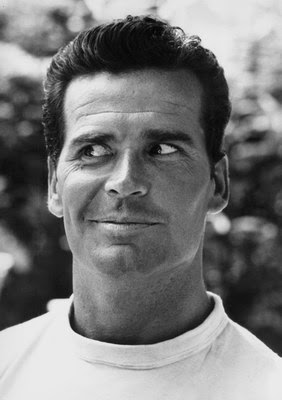
James Garner (1928-2014)
Sunday, 8 June 2014
The Story of Temple Drake (1933)
The opening credits of "The Story of Temple Drake" start with the image of a decaying Southern plantation house during a storm. Immediately you are aware that something darker is coming. But this is not a horror film. Instead is an adaptation of Faulkner's novel "Sanctuary". What follows is one of the most unique, key films from the 1930s that due to rights issues (methinks) has lingered around in vaults (originally a Paramount production, if I am not mistaken 20th Century Fox now holds the rights).
From the introduction and the introduction to her lingerie, we know Temple Drake is not as virtuous as her grandfather would like, and certainly not as girls should be. She herself states she isn't, even if there is a half hearted attempt to disguised it later on when we see what some of the more frustrated men wrote on the toilet's wall. The character enjoys sex and she knows it: later there is a clear implication that during their time together, the only moments when she "doesn't look down" on Trigger are those in bed.
It is surprising that the film was made at all. The novel was deemed innappropriate material for cinema audiences, and while the film presents (as far as I know) a more sanitised version of the story, it still manages in its very short and fast paced 70 minutes to be extremely dark covering murder, rape and Stockholm Syndrome. As if to provide the contrast, the film is beautifully shot by Karl Struss (who won an Oscar for "Sunrise") with the key night sequences shot with a very noir feel.
 This is arguably Miriam Hopkins' best performance. While the final sequences provide her with the showcase piece that most actors love to have (and she's very good in those), her best moments come after the rape scene: the blank expression being the most outwardly expression of the shock she has just experienced. But generally, there are no hysterics, not even small ones, and in the end the all scenery is intact. And it's not just Hopkins that give a career best. Jack La Rue as Trigger is unforgettable. His close-ups are the most menacing of the 1930s. His presence alone is enough to make the audience unconfortable.
Furthermore, it's not just Temple and Trigger, all the characters are unsympathetic except the murdered boy: the judge, the grandfather, the boy who abandons Temple, the couple, even the lawyer who wants to marry Temple Drake. The film neither needs or asks for your sympathy. "Baby Face" the closest I can think in that it doesn't ask sympathy from the viewer. The irony is that two of the most daring films of the 1930s in terms of characterisation (along with Mae West) helped a new order that enforced the Production Code and forced into the underground the seedier side of life.
"The Story of Temple Drake" is a very special film. For a moment in time, it promised to set a direction for a (Hollywood) Cinema that never came to be. The surest sign of this is the impact the film continues to have in the lucky few than have found it. If you have a chance to watch it, grab it.
From the introduction and the introduction to her lingerie, we know Temple Drake is not as virtuous as her grandfather would like, and certainly not as girls should be. She herself states she isn't, even if there is a half hearted attempt to disguised it later on when we see what some of the more frustrated men wrote on the toilet's wall. The character enjoys sex and she knows it: later there is a clear implication that during their time together, the only moments when she "doesn't look down" on Trigger are those in bed.
It is surprising that the film was made at all. The novel was deemed innappropriate material for cinema audiences, and while the film presents (as far as I know) a more sanitised version of the story, it still manages in its very short and fast paced 70 minutes to be extremely dark covering murder, rape and Stockholm Syndrome. As if to provide the contrast, the film is beautifully shot by Karl Struss (who won an Oscar for "Sunrise") with the key night sequences shot with a very noir feel.
Furthermore, it's not just Temple and Trigger, all the characters are unsympathetic except the murdered boy: the judge, the grandfather, the boy who abandons Temple, the couple, even the lawyer who wants to marry Temple Drake. The film neither needs or asks for your sympathy. "Baby Face" the closest I can think in that it doesn't ask sympathy from the viewer. The irony is that two of the most daring films of the 1930s in terms of characterisation (along with Mae West) helped a new order that enforced the Production Code and forced into the underground the seedier side of life.
"The Story of Temple Drake" is a very special film. For a moment in time, it promised to set a direction for a (Hollywood) Cinema that never came to be. The surest sign of this is the impact the film continues to have in the lucky few than have found it. If you have a chance to watch it, grab it.
Sunday, 1 June 2014
Kay Francis' diamonds: Jewel Robbery (1932) and Trouble in Paradise (1932)
In
1932, Kay Francis twice got her jewels stolen by very skilled
thieves. First, William Powell took her new diamond ring in “Jewel
Robbery”; then Herbert Marshall took her new diamond purse in
Lubitsch's “Trouble in Paradise”. In both instances, the thieves
returned the stolen item and return for her. I have now watched both
films three times over the last 18 months or so, the last time as a
double bill at the BFI. So I have decided to write about them
together as well.
“Trouble
in Paradise” is one Ernst Lubitsch's most famous titles. Along with
Francis, it stars Herbert Marshall and Miriam Hopkins as the duo
intent in stealing as much as possible from Francis' Madame Colet, a
widow who owns a perfume company. William Dieterle's “Jewel
Robbery” co-stars William Powell as the thief with designs on
Francis. The first was made by Paramount, the second by Warner Bros.,
but in an atypical style – in fact, if you showed me the film
without credits, I'd have bet on Paramount. I love both films. But if
I have to chose a favourite, I'd go with “Jewel Robbery”, as I
feel it has improved with every viewing. However, it suffers
from two obvious disadvantages even before one watches it: its
availability and its similarity to Lubitsch's film.
 On
the first point, one of the great problems in defining the film canon
(or any other canon) is availability. If a film is not shown, how are
we to judge it? “Jewel Robbery” is neither well-know nor was it
easily available or screened: and if no one can see it, no one can
judge it. If it has no reputation, then it's forgotten. Fortunately,
more recently it seems to have been rescued and it even has made it
into the wonderful “Forbidden Hollywood” DVD sets (which is how I
first discovered it). Don't get me wrong, this a Hollywood factory
product; just a damn good one. On the second point, the film probably
struggled with is its thematic similarity to the better known
Lubistch and more important its well-deserved reputation in his
canon. I have no idea of the production order of the films, and
whether WB copied Paramount or vice-versa (since Kay Francis was
borrowed from WB I wouldn't discard it) or if it was just a
coincidence, but “Jewel Robbery” made into the screens two months
earlier according to IMDb.
On
the first point, one of the great problems in defining the film canon
(or any other canon) is availability. If a film is not shown, how are
we to judge it? “Jewel Robbery” is neither well-know nor was it
easily available or screened: and if no one can see it, no one can
judge it. If it has no reputation, then it's forgotten. Fortunately,
more recently it seems to have been rescued and it even has made it
into the wonderful “Forbidden Hollywood” DVD sets (which is how I
first discovered it). Don't get me wrong, this a Hollywood factory
product; just a damn good one. On the second point, the film probably
struggled with is its thematic similarity to the better known
Lubistch and more important its well-deserved reputation in his
canon. I have no idea of the production order of the films, and
whether WB copied Paramount or vice-versa (since Kay Francis was
borrowed from WB I wouldn't discard it) or if it was just a
coincidence, but “Jewel Robbery” made into the screens two months
earlier according to IMDb.
Kay
Francis is, of course, the obvious thing the two films have in
common. And despite the many, many wardrobe changes (the most extreme
example being the “Yes Madam Colet/No Madam Colet” sequence in
“Trouble in Paradise”), the characters are quite different.
Lubistch goes at lengths to show that Madame Colet, while a bit naïve
and very rich and keen on pretty things, isn't a bad person – she
fights her boardroom quite charmingly saying she won't lower her
employees wages. By contrast, in “Jewel Robbery” and by her own
admission, Francis' character is a thrill seeking, superficial and
bored lady who lunches. This is maintained throughout the film, from
her glorious awakening and bath to her final close-up. What both
films show is that Francis was a good comedienne and ask an
interesting “what if” her career had been in Paramount comedies
rather than the WB cheaper women's pictures.
Both
films are also prime Pre-Code examples. Just to stick to “Jewel
Robbery”: suggestive dresses (the dressing gown), drug use,
adultery for thrills, trivialisation of marriage (the suggestion that
she should be faithful because of diamonds) and several
stages of undressing, many, many hints of sex and of course, Kay
Francis' glorious, naughty final close-up. At moments it feels like
it out-Lubistches Lubitsch...
But
“Jewel Robbery” has two great advantages over the Lubitsch. The
most obvious is the leading man. William Powell is a perfect cast as
the suave, seducing thief. The initial robbery sequence is a
perfect display of his easiness in the role. Herbert Marshall is
just flat. It's his best performance as far as I can tell, but there
isn't much competition there. The
second is the flow of the film. The tight timescale (the action lasts
less than 24h) helps maintain a coherence that is missing in “Trouble
in Paradise”, which goes from Venice to Paris over the course of
several months, and more importantly the way it frames the two women
in the picture: Miriam Hopkins dominates the first 20min or so, then
disappears for a considerable amount of time and never fully
reappears.
 But
it is the Hopkins/Francis duality that actually gives “Trouble in
Paradise” its strongest grip over the audience. Like in “The Philadelphia Story” a few years later, you are never sure
which woman will win – for this is a duel between the two and the
spoils are the man and the jewels he steals. Then, there are the many
wonderful witty moments Lubitsch filled his films with. From the
dialogue (e.g. “maybe I am wrong, maybe he is her secretary”);
the closed doors and changing clocks; and finally the two most
obvious sexual moments in Lubitsch's work I am aware, the two moments
when Hopkins and Marshall out-steal each other.
But
it is the Hopkins/Francis duality that actually gives “Trouble in
Paradise” its strongest grip over the audience. Like in “The Philadelphia Story” a few years later, you are never sure
which woman will win – for this is a duel between the two and the
spoils are the man and the jewels he steals. Then, there are the many
wonderful witty moments Lubitsch filled his films with. From the
dialogue (e.g. “maybe I am wrong, maybe he is her secretary”);
the closed doors and changing clocks; and finally the two most
obvious sexual moments in Lubitsch's work I am aware, the two moments
when Hopkins and Marshall out-steal each other.
The
other thing that works well in the Lubitsch film is that is clearly
an ensemble piece. Hopkins is wonderful whenever she's given a
chance (as she would be later in “Design for Living”) even if her
mannerisms occasionally are a bit too much. Then there are Charlie
Ruggles and Edward Everett Horton in one of his less prissy roles,
albeit the one that suggests that he may prefer “business
associates” of both genders. C. Aubrey Smith and Robert Greig
complete the cast. By contrast, “Jewel Robbery” becomes quickly a
two hander between Francis and Powell (in their sixth of seven
collaborations).
I
think these are two of the best Pre-Code comedies Hollywood produced. They are precursors of the elegant comedies to come, mostly
done by Paramount and starring the likes of Claudette Colbert, Carole
Lombard and Barbara Stanwyck. They're also more adult that what
would become the norm in film; films where excitement and thrills (or lust,
if you prefer) win over love and wholesome values. Which probably
make them perfect for the 21st century.
Subscribe to:
Posts (Atom)